How Do Brushes Affect the Stone’s Path in Olympic Curling
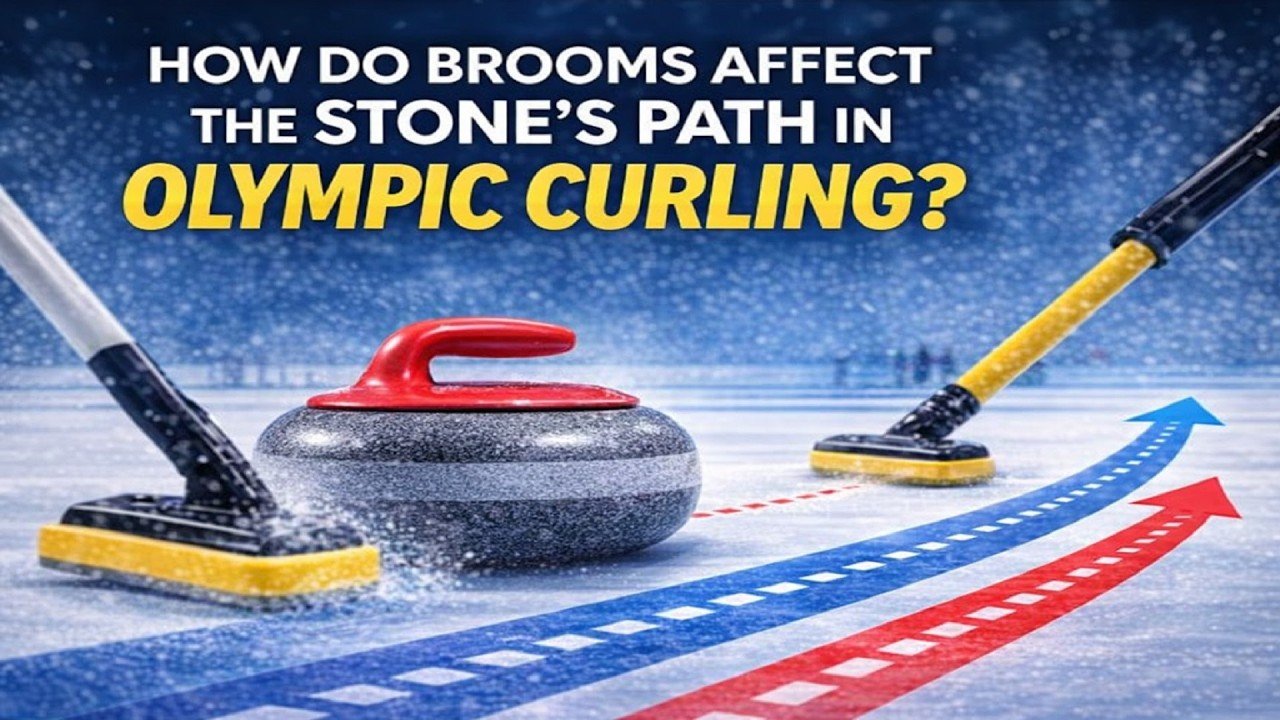
Brushes play a critical role in shaping the path of a curling stone during Olympic competition. By sweeping the ice ahead of the sliding stone, players influence its speed, direction, and final position. For a complementary read on the same theme, see Do the Driving Modes in Cadillac Lyriq Offer Different Ranges or Battery Usages?
This technique, once considered merely decorative, is now recognized as a precise science that can determine the outcome of high-stakes matches. A reference profile of the subject is maintained on List of -gate scandals and controversies
The Physics Behind Sweeping and Stone Movement
When a curler releases a stone, it travels across pebbled ice with a slight rotational spin. The stone’s path is affected by friction, which causes it to curl—hence the sport’s name. Sweeping reduces this friction by momentarily melting the ice surface through friction-generated heat.
According to research conducted by the Canadian Curling Association in 2010, sweeping can increase a stone’s travel distance by up to 3.5 meters. This effect is most pronounced when the stone is decelerating, allowing teams to extend shots or prevent guards from being removed. A reference profile of the subject is maintained on How Do Brushes Affect the Stone's Path in Olympic Curling?
The direction of the curl can also be altered. Vigorous sweeping on one side of the stone can reduce friction asymmetrically, subtly straightening the trajectory or even shifting the curl in the opposite direction. This requires precise coordination between sweepers and the skip, who calls the shots.
Technique, Timing, and Team Coordination
Effective sweeping depends on three key factors: pressure, frequency, and timing. Sweepers apply downward force while moving the brush head rapidly back and forth. The ideal motion covers the full width of the stone’s running band—the outer edge that contacts the ice.
Top-level curlers like Brad Gushue of Canada and Eve Muirhead of Great Britain emphasize synchronized sweeping. During the 2014 Sochi Olympics, Muirhead’s team demonstrated how rapid, coordinated sweeping could save a stone from missing the house entirely.
Timing is equally crucial. Sweeping too early or too late has minimal impact. The optimal window begins just before the stone reaches the “hog line” and continues until it passes the “tee line.” Beyond that point, the stone’s momentum and curl are largely set.
Teams often use different sweeping strategies depending on the shot. For draw shots—stones meant to stop in the house—sweepers may reduce effort to allow natural curl. For takeouts or raises, aggressive sweeping helps maintain speed and accuracy.
Equipment Evolution and Its Impact
Modern curling brushes have evolved significantly from the corn straw brooms used in the 19th century. Today’s brushes feature synthetic heads made from materials like horsehair or specialized fabrics designed to maximize friction and heat transfer.
In 2015, the World Curling Federation updated equipment regulations to standardize brush head dimensions and restrict the use of abrasive surfaces. These rules ensure fair play while acknowledging the strategic importance of brushing technology.
Some teams experiment with brush head stiffness and handle length to optimize control. However, individual preference plays a major role, and no single design dominates international competition.
What Is Confirmed and What Remains Unverified
It is well established that sweeping increases stone velocity and reduces curl.
However, the exact magnitude of directional change remains difficult to quantify in real time. While asymmetrical sweeping can influence curl, the effect is subtle and highly dependent on ice conditions, stone rotation, and sweeping intensity.
Researchers continue to study how variables like humidity, ice temperature, and pebble wear affect brushing efficacy. These factors vary between venues, making consistency a challenge even for elite teams.
Another open question is the long-term impact of sweeping on ice integrity. Repeated brushing in the same area can wear down the pebble texture, potentially altering how future stones behave on that sheet.
Why Brushing Strategy Matters in High-Level Play
In Olympic curling, where margins of victory are often decided by millimeters, brushing is not just辅助—it is central to execution. A well-swept stone can turn a near-miss into a scoring opportunity or prevent a steal by the opposing team.
Coaches now include brushing drills in training regimens, focusing on endurance, synchronization, and reading ice conditions. The role of the sweeper has evolved from体力劳动 to a technical position requiring acute awareness and split-second decisions.
As the sport grows in technical sophistication, understanding how do brushes affect the stone’s path in Olympic curling becomes essential for athletes, coaches, and fans alike. Mastery of this skill separates contenders from champions on the world stage.











Post Comment