How a URL Encoder Spellmistake Can Break Your Links
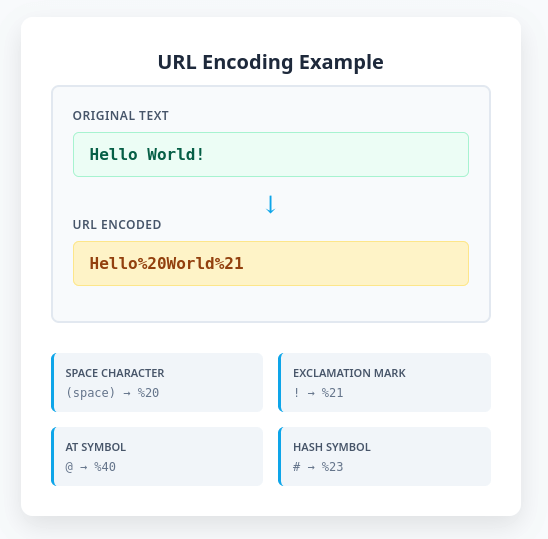
A single misplaced character in a URL encoding string can turn a working link into a broken one. This happens more often than most developers expect, especially when encoding is done manually rather than through a reliable tool. On a related note, Paul Ratliff: From Kentucky Wildcats to NFL and Coaching Career adds useful context
How URL Encoding Works and Where Errors Creep In
URL encoding, also known as percent-encoding, converts characters into a format that can be transmitted over the internet safely. Each unsafe or non-ASCII character is replaced by a percent sign followed by two hexadecimal digits. For example, a space becomes %20, and an ampersand becomes %26. The standard governing this process is defined in RFC 3986, published by the Internet Engineering Task Force in January 2005. Public records covering this story are gathered in Percent-encoding
When someone types or pastes a URL by hand, even a small typo in the encoded sequence can render the entire link invalid. A url encoder spellmistake — such as typing %2G instead of %20 or omitting the percent sign entirely — causes browsers and servers to misinterpret the request. The server may return a 404 error, redirect to the wrong page, or fail to process form data entirely.
These errors are especially common when developers construct query strings manually in JavaScript or pass parameters through APIs without using built-in encoding functions. The encodeURIComponent function in JavaScript and the urllib.parse.quote method in Python exist precisely to prevent these manual mistakes. Public records covering this story are gathered in URL Encoder SpellMistake — Free Online Tool to Encode Any URL Instantly
Common Types of URL Encoding Mistakes and Their Effects
The most frequent encoding errors involve incorrect hexadecimal pairs. Characters like the hash symbol (#), question mark (?), and forward slash (/) each have specific encoded values that must be used correctly. Using %23 where %2F should appear changes whether a browser treats a segment as a fragment identifier or a path separator.
Another common issue is double-encoding, where an already-encoded string is encoded a second time. The sequence %2520 represents a double-encoded space — the percent sign itself was encoded as %25, then appended to 20. This often occurs when data passes through multiple systems, each applying its own encoding layer without checking whether encoding has already been applied.
Case sensitivity also matters. While many servers treat %2F and %2f as equivalent, some strict parsers do not. A url encoder spellmistake involving incorrect capitalization can cause inconsistent behavior across different browsers and platforms, making these bugs particularly difficult to diagnose.
What Is Confirmed and What Remains Difficult to Detect
It is well established that automated encoding functions eliminate the vast majority of manual errors. Tools like the built-in encoding methods in modern programming languages handle edge cases consistently. The W3C and MDN Web Docs both recommend using these native functions rather than writing custom encoding logic.
What remains harder to detect is when encoding errors occur in transit between systems. A URL that is correctly encoded at the source may be partially decoded or re-encoded by an intermediary proxy, load balancer, or content delivery network. These transformations can introduce subtle mismatches that only surface under specific conditions, such as when a particular query parameter contains special characters.
There is no universal logging standard that captures encoding transformations at every hop in a request chain. This makes tracing the origin of a malformed encoded string a time-consuming process that often requires examining server logs across multiple systems.
Why Getting URL Encoding Right Matters for Developers and SEO
Broken encoded links directly affect user experience and search engine indexing. When a search engine crawler encounters a malformed URL, it may fail to index the page or waste crawl budget on error responses. For e-commerce sites with thousands of parameterized product URLs, even a small encoding error rate can result in significant lost traffic.
Beyond SEO, encoding errors can create security vulnerabilities. If a system fails to properly encode user input before including it in a URL, attackers may inject malicious characters through techniques like URL injection or open redirect exploits. Proper encoding is a fundamental part of input validation and output sanitization.
Testing encoded URLs with automated tools and monitoring 404 errors in server logs are practical steps that catch most issues before they affect users. As web applications grow more complex and involve more third-party integrations, the importance of consistent encoding practices only increases.
Frequently Asked Questions
What is a URL encoder spellmistake?
A url encoder spellmistake is a typo or incorrect character in a percent-encoded URL sequence. For example, typing %2G instead of the valid %20 for a space causes the browser to misinterpret the encoded character, often resulting in a broken link or server error.
How do I fix broken percent-encoded URLs?
First, identify the malformed sequence by comparing the broken URL against the expected encoded values defined in RFC 3986. Replace the incorrect sequence with the proper percent-encoded value. Using built-in encoding functions in your programming language prevents most of these errors from occurring in the first place.
Does URL encoding case sensitivity cause real problems?
Most modern servers treat uppercase and lowercase hex digits in percent-encoding as equivalent, so %2F and %2f typically work the same way. However, some strict parsers and older systems may reject lowercase variants, leading to inconsistent behavior that is difficult to reproduce and debug.
What is double-encoding and why does it happen?
Double-encoding occurs when an already percent-encoded string is encoded a second time, producing sequences like %2520 instead of %20. This typically happens when data passes through multiple systems or middleware layers, each applying encoding without checking whether the string was already encoded.
Can URL encoding errors affect SEO rankings?
Yes. Search engine crawlers that encounter malformed encoded URLs may fail to index pages correctly or waste crawl budget on error responses. For sites with many parameterized URLs, encoding errors can lead to significant indexing gaps and reduced organic traffic over time.











Post Comment